
Similar Books
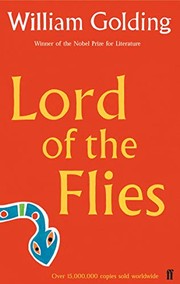 Lord of the Flies
 Redwall
 The Bad Beginning
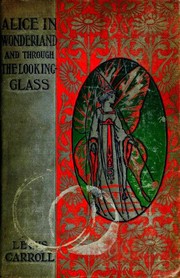 Alice's Adventures in Wonderland / Through the Looking Glass
 The Calculating Stars
shoemakerrick librarything | No Rating
A bit of a slog to get through EVERYTHING. But, occasional tedious sermonizing and casual misogyny and repeated fart jokes aside, I'm enough of a nerd revel in the experience of time travel this work allows.
douglasbeagley librarything | 5.0 out of 5
No, seriously, it's really good. I'm sorry they made you read it. But it really is astonishing. Like, Shakespeare astonishing.
Kristelh librarything | 4.0 out of 5
I read this for a British author challenge; to read a narrative poetry. I have had this on my shelf for sometime. Not sure how long. My copy is a paperback, modern English translation by r.m. lumiansky (1948). Printing 1971. Canterbury Tales is really a collection of short stories told by a group of English pilgrims who are making the trip from a suburb of London to the shrine of St. Thomas Becket at Canterbury. So it is a frame story of sort. Each pilgrim was to tell 4 stories and someone was suppose to win. Written in the 1300's the stories give a cross-section of English society. England is Catholic at this time. Pilgrimages were encouraged. Maybe this explains why England is still a land of people who "walk". The Pilgrimage also accounts for the conglomeration of people that come together to tell these tales. You have Knights, Millers, Cooks, Man of Law, Prioress, Monk, Priest, Wife, Friar, Cleric, Merchants, Squires, Nun, Yeoman, etc as storytellers. The short story collection, 24 tales not all complete but these stories explore a variety of topics from moralizing, to religious, romance, bawdy. Some will seem very familiar because they have been borrowed from other sources. Chaucer wrote the works in Middle English. He did not write in Latin as was the custom, but wrote for the English people. I can't say I enjoyed all the stories but I enjoyed the fact that I read this book finally and now know what it is and I also appreciated that people were on a walk to see the show more shrine of Becket who I've read a bit about. Seems to fill in a spot for me.
StefanY librarything | 4.0 out of 5
The Canterbury Tales is an entertaining romp through the Medieval English countryside. If you don't know what it's about, the Canterbury Tales is a collection of stories told by a group of pilgrims on their way to Canterbury Cathedral. The tales are told as a way to entertain each other on their journey and the one who tells the best tale will earn a fine meal paid for by the other travelers. This is actually an incomplete work as Chaucer died before completing it, but it is a fine example of early English literature and one of the most important pieces of the English Canon.
The tales here vary in length and content as to the prologues and epilogues containing the goings on of the party members. Chaucer writes with a great sense of humor and, since he is writing in the language of the common folk, the content contains many lewd and bawdy jokes and events. It is a very entertaining read and if one wants more than just entertainment, there is a lot of social commentary about life in medieval England that can be gleaned throughout the text.
I was a little unsure what to expect when I read this and don't be turned off by the introductory prologue in which our narrator introduces all of the characters. It can be a little long and dry in parts, but it helps to give a clear picture of the characters in the party as they interact with one another and tell their respective tales.
Added note: I had to read this again for another class and this time we read it in the original Middle show more English. Having read the Canterbury Tales earlier, I appreciated the fact that I already had a handle on the general storyline of the tales and could instead concentrate on the nuances of the language and the beauty of the rhyme scheme. I thoroughly enjoyed this second time through the book and have increased my rating by a point as a result.
Africansky1 librarything | 5.0 out of 5
The pleasure of this book lies in the double bonus of the ever green stories of Chaucer together with the wonderful selection of illustrations drawn from contemporary, medieval illuminated manuscripts. I know that Cresset is a publisher for the mass market but this edition is particularly attractive and I think very collectable. There is an excellent introduction by John Wain and an apposite foreword by Melvyn Bragg while the text is Chaucer but with old English given an understandable and very readable translation by the great Chaucer authority, Nevill Coghill. This particular volume is not a text for university study but is a volume for pleasurable and bedtime reading. It returns me to the humour and the wisdom of Chaucer and reminds me that there are so many English expression from Chaucer which we still use today - for example, keeping mum, or many a true word said in jest, or rotten apples spoiling all in the barrel. We are reminded of the richness of the English language, the debt we owe to Chaucer and the freshness of these 14th century tales. This particular edition is worth acquiring ( readily available) and adding to one's book treasures. It is a very beautiful book. The illustrations are well matched to the text and repay close study. If you have never read Chaucer or if you read Chaucer as a chore, take another look and give yourself the treat of a classic of literature in a lovely format.