
Similar Books
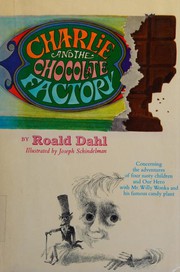 Charlie and the Chocolate Factory
 His Majesty's Dragon
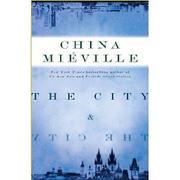 The City & The City
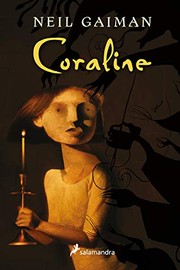 Coraline
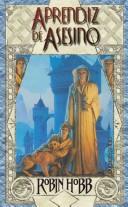 Assassin's Apprentice
JulieChristine librarything | 4.5 out of 5
Fans of Wilde's acclaimed plays will enjoy this solo novel. It's dense dialogue spells out all manner of philosophy and topics surround the ideology of youth and beauty, vanity, pleasure and sin. With the exception of a few chapters just over halfway through, the book is fast-paced, taking the reader through each step of Dorian's decline into madness. Loved it, minus its fallacious depictions of women.
Eyejaybee librarything | 2.0 out of 5
For about the last thirty years I have been convinced that Nineteen Eighty-Four was the most egregiously overrated classic work of English literature, but having reread this I am no longer so sure. My recollections from having read this more than forty years ago were of a highly amusing and insightful novel that had the reader doubled over with laughter. That was not my experience this time around – I found it very tedious, and the writer’s smugness of tone and self-satisfaction with his perception of his own cleverness proved an insuperable barrier to any entertainment that the story might otherwise have offered.
Councillor3004 librarything | 5.0 out of 5
What would you do to gain eternal youth, to be beautiful and young and highly respected forever and ever? In the first instance, you should think long and longer about such a yearning, because in the end, it is not external beauty which counts ... it is the beauty of your soul. A lesson Dorian Gray has to learn in one of the most gruesome ways you could imagine.
"The Picture of Dorian Gray" is an absolute masterpiece, which is a compliment I rarely pay a book. Oscar Wilde can easily be considered to be a genius, which is why I included a few whole bunch of interesting quotes at the end of the review which provoke the reader to think about the story. The plot itself is probably well-known: the young man longing for eternal youth and paying a horrible price for his desires. In the context of modern literature, Wilde's novel is considered to be a classic and therefore often connected with long-winded plots lacking tension and pace. Both tension and pace are aspects you might be surprised to find in this novel. Not only is the writing eloquent and elegant, but also inciting you to continue reading page for page for page.
Authors like Charles Dickens or Alexandre Dumas come to mind when talking of elongated novels with a lot of details which only add to atmosphere, not to plot itself, and Oscar Wilde could certainly have followed their paths ... but he didn't. Instead, he was able to create atmosphere out of his plot elements, to create plot twists out of the novel's atmosphere, show more to draw breathing characters and let them decide where the story heads. And he did so on a comparatively small amount of pages; not a single word felt redundant or out of place.
It is nearly impossible to talk of this novel without revealing some of the plot elements (a lot of which surprised me out of nowhere and had me on the edge of my seat - it may be surprising to admit, but this classic novel was way more suspenseful than an Agatha Christie novel or a James Bond spy thriller - at least in comparison to those I have read). A lot of different characters were introduced during the course of the story: Basil Hallward, the painter of the portrait and infatuated with Dorian; Henry Wotton, an imperious aristocrat and friend of both Basil and Dorian; Sibyl Vane, a singer and actress Dorian falls in love with; James Vane, Sibyl's brother; and others among them. None of them appeared to be likeable (although I did feel sympathy for Basil), but they appeared to be realistic with their all too human longings and wrong decisions.
Here follows a compilation of quotes I bookmarked during my reading experience because of their interesting background, their depth or the simple beauty of their words:
(And yes, I did bookmark nearly half the book.)
"[f]or there is only one thing in the world worse than being talked about, and that is not being talked about."
"Because to influence a person is to give him one's own soul. He does not think his natural thoughts, or burn with his natural passions. His virtues are not real to him. His sins, if there are such things as sins, are borrowed. He becomes an echo of some one else's music, an actor of a part that has not been written for him. The aim of life is self-development. To realize one's nature perfectly - that is what each of us is here for."
"The only way to get rid of temptation is to yield to it."
"Nothing can cure the soul but the senses, just as nothing can cure the senses but the soul."
"You know more than you think you know, just as you know less than you want to know."
"Nowadays people know the price of everything and the value of nothing."
"Young men want to be faithful, and are not; old men want to be faithless, and cannot."
"Experience was of no ethical value. It was merely the name men gave to their mistakes."
"We are not sent into the world to air our moral prejudices. I never take any notice of what common people say, and I never interfere with what charming people do. If a personality fascinates me, whatever mode of expression that personality selects is absolutely delightful to me."
"Pleasure is Nature's test, her sign of approval. When we are happy, we are always good, but when we are good, we are not always happy."
"[w]e live in an age when unnecessary things are our only necessities;"
"There is a luxury in self-reproach. When we blame ourselves, we feel that no one else has a right to blame us. It is the confession, not the priest, that gives us absolution."
"The more he knew, the more he desired to know. He had mad hungers that grew more ravenous as he fed them."
"[n]o theory of life seemed to him to be of any importance compared with life itself."
"Sin is a thing that writes itself across a man's face. It cannot be concealed."
"Scepticism is the beginning of faith."
"In the common world of fact the wicked were not punished, nor the good rewarded."
"As for omens, there is no such thing as an omen. Destiny does not send us heralds. She is too wise or too cruel for that."
"I have no terror of death. It is the coming of death that terrifies me. Its monstrous wings seem to wheel in the leaden air around me."
"Death is the only thing that ever terrifies me. I hate it."
"Why?" said the younger man wearily.
"Because," said Lord Henry, [...] "one can survive everything nowadays except that."
"The tragedy of old age is not that one is old, but that one is young."
Dr. Appu Sasidharan (Dasfill) goodreads | 5.0 out of 5
Oscar Wilde tells us the story of Dorian Gray, who was obsessed with beauty and youth. His narcissistic obsession with beauty made him trade his soul for eternal youth.
I think this is one of those few novels that was the topic of many Psychological studies. The morality aspect of this novel has been a topic of discussion for more than a century now. This is a book that the celebrities of our generation should undeniably read. It shows the plight of unnecessary obsession that will destroy our soul and conscience.
The philosophy in this novel will make you contemplate for a long time. This is one of those novels that you should never miss.
"Nothing can cure the soul but the senses, just as nothing can cure the senses but the soul."
lwdavidson61 librarything | 4.0 out of 5
On mornings like this, where the Walla Walla sky looks like it’s been smudged with the world’s most complete palate of gray, I like to curl up with a book that reminds me I’m not nearly as messed up as fictional people can be. The Picture of Dorian Gray, Oscar Wilde’s poisonous love letter to vanity, moral decay, and the dangerous idea that mirrors should mind their own business.
Dorian is that guy who starts out looking like he’s just stepped out of a cologne ad, all cheekbones and promise, and ends up proving that eternal youth is best left to dermatologists and plastic surgeons. Meanwhile, his portrait does all the heavy lifting, aging harder than a rock star on a 50th anniversary farewell tour.
Wilde knew secrets of humanity's vanity like a serious therapist and knew exactly when to stick the blade in. Every line is like a straight razor, every aphorism full of truth and venom. The man didn’t waste words.
What I love most is how Dorian Gray asks a question we’re too afraid to say out loud: If we could hide all our sins somewhere out of sight, behind a locked door, under a coat of varnish, would we behave any better? Spoiler: humanity doesn’t fare well in that hypothetical. We can barely be trusted with smartphones.
This isn’t just a novel. It’s a moral Rorschach test dipped in decadence. You don’t read it. You inhale it, choke a bit, and feel weirdly grateful for the experience. Like drinking absinthe in a room where the wallpaper is judging you. And show more it sticks with you like a mouth full of peanut butter - thick, persistent, and impossible to swallow without making strange faces.
If your mood or soul currently leans toward gray-scale introspection, pour yourself something warming (I recommend a highland Scotch), settle in, and let Wilde remind you that the real monsters aren’t in the portrait—they’re the parts of ourselves we hope no one sees. I only gave this 4 stars because the damned story won't leave me alone, even years later.