
Similar Books


Carol420 librarything | 4.5 out of 5
When a young girl discovers a blue door in a field she views, another world, taking her into a path of discovery, destiny, empowerment, and love. I have read a couple of this authors later books so when I found this one at a book sale and that it was Alix Harrow's first book, I was curious to how much, if any, the writing had changed, plus it was a good price and I had liked the others that I had read...so I gave it a "home". The story centers on a young girl, January Scaller, who grew up under the watchful eye of two men...the wealthy Cornelius Locke who was her father's employer, and Julian, her father whose job it was to travel the world in search of the "odd" object and valuable treasures for his employer's collection. This strange collection is housed in Mr. Locke's sprawling Vermont mansion. January lives what could be considered a "charmed" childhood, but she feels stifled by the "good old boys" club that Mr. Locke and his friends belong to. They all treat her like she's a curiosity, which she kind of is. A lot of that is because she is a mixed-race child with a long, long precocious streak. She is forced to wear elaborate clothes, which she hates...and to show lady-like, docile behavior, which is certainly NOT in any way...her "thing"...nor is the many society gatherings she is forced to attend. Then when she's 17, her father just disappears, and January finds a book that will change her life forever. She has friends; allies, in the persons of Samuel, the show more grocer’s son; Jane, the Kenyan woman sent by Julian to be January’s companion; and her best friend ever...Bad, her dog. With them, January embarks on an adventure that will lead her to discover secrets about Mr. Locke, the world and all its hidden doorways as well as her own family. The method that the author uses to draw a "picture" of the door with words, was both clever and interesting. (From the book) “Sometimes I feel there are doors lurking in the creases of every sentence, with periods for knobs and verbs for hinges” Vivid imagery can be found on almost every page. The book also has quiet a diverse cast of characters with a very strong lead character. Though this portal is a huge part... actually the backbone of the story...it doesn’t take away from any of the things that help it succeed as an interesting, and well-done story.
Evamaren librarything | No Rating
I'm DNFing this because I kept having to force myself to continue and started hate-reading and marking all the passages I disliked most. I'm happy for all those who were able to be charmed by this and I was as well - for the first few pages. Disclaimer: I am not a huge fan of portal fantasy, slow pacing, or flowery writing to begin with, so I was hoping that the book would be good enough to draw me in regardless. If the writing is really wonderful, the characterization is subtle and I love and understand the characters, then I'll generally love a novel anyway. Unfortunately, it's not working out with this one for me:
- The pacing was not just slow, it was one step forward, two steps back, then another step back, then a few steps forward again, then a tantalizing hint that something will happen, but no, let's go back to when the heroine was 13 when nothing was happening instead. And then when you think yes! finally... a book within a book starts about yet another character, etc.
- really bad Italian, oh, and fake German names plastered onto the most offensively stereotypical fake Germans I've read in a while (and then the book tries to make a point *against* stereotypes, micro-aggressions, etc.?)
- on almost every page, the author describes what people and things smell of, which is almost always completely unbelievable/impossible. E.g. a letter which has traveled all around the world from a cruise ship currently in icy waters still "smelled of ice" when it reached the show more heroine in America. First of all - ice doesn't have any smell, and secondly, even if our heroine had a magical special nose then it would be much more likely for it to smell of whatever the writer had for breakfast on the cruise ship while writing, or the local post office where she picked up the letter, or anything but distant ice which must have somehow sprayed its ice pheromones all over the letter! Surprisingly, when her father returns from this icy trip, he smells of "jungles, steamships, adventure, dark caves, and unseen wonders". Now, another gentleman, we learn, always smells of "summer and fresh-cut grass", but not his room, oh no - his room always smells of his tobacco and decanters. Okay. Now what about books, you ask? She sniffs them, and some smell of "cheap thrills or painstaking scholarship", some smell of... you get the picture. If you have ever actually smelled cheap thrills, please do tell me what it's like - I'm curious! To me, this kind of writing smells suspiciously of a very over-enthusiastic application of the "describe all senses!" creative writing class advice. Or actually, I would have appreciated a description of what her senses actually perceived, not fanciful imaginary smells you know can't be there.
- When she tells us what year it now is in her story, she never forgets to give us a google search results's worth of what happened that year around the world. Take this passage "In the early summer of 1906 I was almost twelve. The RMS Lusitania had just launched as the largest ship in the world (Mr. Locke promised we’d get tickets soon); the newspapers were still full of grainy pictures of the wreckage in San Francisco after that awful earthquake; and I’d used my allowance to buy a subscription to Outing magazine just so I could read Jack London’s new novel every week." First of all - "grainy pictures"? This is clearly viewed with the eyes of a modern author, our narrator wouldn't have had any idea that those pictures were grainy or not up to our modern standards. Then the mention of the Lusitania - also clearly meant for the modern reader, not an authentic character voice.
- Our heroine manages to spend *all day* in the same room with people for months/years without getting to know them in the slightest. They remain mere cyphers. I'm not getting the feeling that if I continue reading, all these characters will suddenly become real people I can believe in instead of cardboard cut-outs.
So, while this had a nice turn of phrase sometimes, some charm sometimes, and a lovely atmosphere, it's just not for me.
Yun goodreads | 4.0 out of 5
I think this happens to all of us readers. You buy a book you're super excited for, bring it home, put it on your shelf, and there it sits collecting dust for many years. You never seem to find the exact right moment to read it, especially when new and exciting releases keep dazzling you. I confess that's what happened here.
So what held me back from The Ten Thousand Doors of January for so long? Honestly, it was the effusive praise of this book. When it's described as "unbearably beautiful" and "a gorgeous, aching love letter to stories," it makes me shy away. I hear those words and think of flowery, descriptive prose and hardly anything interesting to keep me reading. Ouch.
But I'm so glad I finally took the plunge because I ended up not only finding this beautiful, but also riveting. The story itself has a dreamlike quality to it. It reads like a fairytale all grown up, steeped with magic and wonder. And the rich and beautiful prose perfectly complements it, giving a voice to that imaginative and fanciful journey.
The last two-thirds of the book was absolutely amazing. I couldn't tear through it fast enough. You would've had to pry me away with a crowbar, that's how riveting it was. It felt like I was pulled along on a grand adventure with many unexpected surprises, filled with wonderful characters I could love and cheer for.
But I have to be honest, I found the initial hundred pages to be boring as all heck. The story was slow to start, with hardly anything happening or so it seemed because I didn't know where it was going. Instead, it was mostly January talking about Doors with a capital D and Yule Ian pontificating on the mythology and practicality of entryways. I understand the author was trying to make the story seem real, so January's rambling and the pedantic tone of the inner story all contributed to that. But it sure made it a grueling slog.
In fact, I was so certain I was going to get rid of the book after finishing that I let my baby play with it, so the cover and pages are all bent. And I'd messaged one of my friends who'd read the book saying, "Omg does 10k doors get interesting? Is the story within story just as boring? I’m dying. What possessed me to buy this book?"
Obviously, I've never been so glad to be proven wrong. When I think of books with dull starts that I've pushed through, there's only ever been a handful that I ended up loving. It's so rare to be rewarded, and I'm glad this was the case here. In fact, I suspect this is one of those stories that gets even better on a reread, and I can't wait.
I guess what I'm saying with all this is that if you've held back from reading this book because you have the same fear as me, or you've started and found it dull, maybe give it a chance? Perhaps you would end up loving it like I did and finding the magic within. It certainly is worth the try when the end result could be so amazing.
~~~~~~~~~~~~
✧ Connect with me ✧ Instagram ✧
Elizabeth_Cooper librarything | 5.0 out of 5
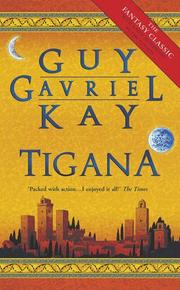
I can't remember the last time I sobbed so much while reading a book or became so interested in the characters and their circumstances. (It may have been while reading [b:Tigana|104089|Tigana|Guy Gavriel Kay|https://i.gr-assets.com/images/S/compressed.photo.goodreads.com/books/1348738842l/104089._SX50_.jpg|1907200] by [a:Guy Gavriel Kay|60177|Guy Gavriel Kay|https://images.gr-assets.com/authors/1218804723p2/60177.jpg], come to think of it. I remember being just as swept away and desperate to read more.)
I adored everything about The Ten Thousand Doors of January: January herself, of course, her mother and father, Samuel and Jane and Bad. The writing is lyrical and heart-wrenchingly beautiful, but not in a showy way. January's voice is so distinct and captivating... the voice of a true Scholar indeed. I loved rooting for her (and her parents!) and following her on the amazing journey she undertakes.
I also have to admit that I typically go to great lengths to avoid reading young adult fiction. I had imagined that all YA main characters were hormonal Mary Sues bouncing from one "too stupid to live" decision to another. (Frankly, that may say more about what I was like as a teenager than anything else.) If this is the calibre of writing and storytelling that hides in the YA section, I've been missing out.
SabethaDanes librarything | 5.0 out of 5
I was told if I loved [b:The Starless Sea|43575115|The Starless Sea|Erin Morgenstern|https://i.gr-assets.com/images/S/compressed.photo.goodreads.com/books/1554996038l/43575115._SY75_.jpg|66444785] then I would also love this book, and so when I finally found a copy, I dropped my entire currently reading list to be taken in by this story.
Wow, no review could do the book justice. The whimsical nature of this tale is breath taking. It and The Starless Sea are in a genre of their own. Books within books, stories about worlds unknown, and characters with an untapped sense of adventure and discovery.
I'm overcome with emotion after finishing this book. The words are woven so elegantly, a fable written to the reader with the purpose of opening their eyes to endless possibilities.
I want more, the many adventures of January, but yet, I am also left with a satisfying feeling of undying happiness. What a magical ride this book was. A comforting, odd, story that will take you into the unknown.
As with The Starless Sea, this book is unconventional, and if you have a hard time with whimsy and loose story lines, it might not be the right book to read. But, if you are looking to get lost in a tale of heartache, determination, and love ever lasting; throw caution to the wind and let this book lead you. It's a must read. One that I will certainly revisit.