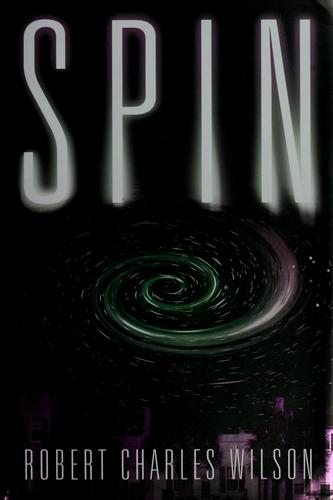
Similar Books


furicle librarything | 4.0 out of 5
Just a great story, interesting plot, well developed characters and cool opening premise. Just :-)
It's more novel and less sci-fi than you might expect, but don't let that discourage you. Read it, it deserved the Hugo, and deserves to be read more than once.
pammab librarything | 3.5 out of 5
One night on Earth, the stars disappear. People expect to see the sun go out in their own lifetimes, and things change.
Fascinating ideas and world building, from the science of astronomy to the way in which religion comes to bear on great mysteries. But something fell flat. Maybe it was the pacing. Some moments had all my senses buzzing as yet another implication fell into place and was announced, but some parts just really didn't need to be there in such detail, or the context repeated so often. Additionally, some of the science had me raising my eyebrow; often, the less explanation was given the more believable the situation was.
I was caught by turns enthralled and impatient. The world building is the real gem in this one, but the rest didn't quite hang together for me. Worth a read if world building is one of the primary things you turn to literature for.
arpanmalviya librarything | 3.0 out of 5
I really liked this book when it began. It is a refreshing change from run of the mill sci-fi novels with careful emphasis on characters and atmosphere. However somewhere around the halfway mark, I started noticing that the plot had not moved forward for several chapters and once I noticed this it became only more and more obvious.
This is a book with serious pacing issues, and at the end of the story - does not offer a lot of closure. The protagonists also do not have any agency in the outcome of the story, which irked me to no end, since the novel was setup as a fight for survival.
All in all, it seems like I hated the book, but I didn't. It just did not payoff like it was shaping up.
JDubba librarything | 3.5 out of 5
Spin is a coming of age love story set in a backdrop of apocalyptic science fiction. Wilson uses a creative technique that divides the story into two long running threads, the culmination of a flashback thread that ends the novel where the future thread begins. He uses the back and forth between past and future to build suspense and let the mystery of the story unfold.
Early in the story, the entirety of the planet Earth is trapped in what scientists eventually discover is a space-time bubble that is causing time outside the bubble to accelerate at an incredible pace relative to the time inside the bubble, hurtling the Earth through time towards the heat death of Sol, evidently within 40 to 50 years rather than the normal 5 billion years it would take to occur in normal time.
Beyond the very surface driven plots about growing up and falling in love, there were some interesting and more subtle subtexts about the moral and ethical dilemmas raised by the impending end of the human race. While this is ultimately our likely end, by compressing the time frame to a single generation, it brings the importance of such a nature squarely to the forefront. What is the meaning and importance of life when all life is disappearing? This question has the same relevance whether humanity suffers a cataclysmic event in 50 years or fades out with the last of the universes energy in 50 billion. By thinking in more concrete terms such as 50 years however, the sense of importance for the question show more is put in a new perspective.
Also in-mixed are some scientific concepts related to extra terrestrial exploration and settlement, and playing with the concepts of long term evolution on sentient beings, nano-tech, artificial life and some other basic scientific fodder. While intriguing at a high level, the science is fairly soft, which works well to kept the story moving at a good pace, but doesn't satisfy that pragmatic science itch that is handled by someone like Kim Robinson.
Not to be left out, Wilson addresses the conflict of science and religion. While it's not spelled out directly, religion is basically given the role of consolation for those who want to stick their heads in the sand regarding reality and pragmatism. Divisive and end the end counter productive. Other than as a plot device to set up particular situations for two of the characters, there is not much new added to the debate here.
john257hopper librarything | 3.5 out of 5
This novel won a Hugo award for best novel. The plot centres around the after effects of a cosmic phenomenon that results in the stars and moon disappearing from the Earth's sky, while the sun, though still present, looks different. The Earth has become trapped inside a membrane, outside which time is passing much more rapidly than it is inside. Like many SF novels, this is one which draws its strength from its ideas, rather than from plot or characters. The plot in my view too often gets bogged down with technological info dumps and accounts of what has happened (telling rather than showing). Most of the characters didn't particularly appeal, though the central character and narrator Tyler Dupree was quite sympathetic. I found out about three quarters of the way through that this is the first of a trilogy, the other volumes of which I will probably read at some point.