
Similar Books
 The Old Man and the Sea
 Last Argument of Kings
 Assassin's Apprentice
 Before they are hanged
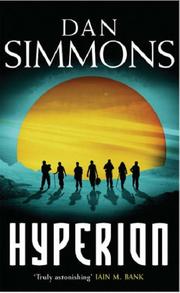 Hyperion
Dorritt librarything | 4.0 out of 5
Have just finished my second time through the book and remain dazzled. In this outing more than any of the others that came before, Chabon modernizes and Americanizes the magical realism of Gabriel Garcia Marquez to create a work that seamlessly blends fantasy and reality to create an alternate universe that is at once exotic, meticulous, poignant, and brutal.
What starts off as a fairly familiar-seeming plot (morally and emotionally bankrupt detective with nothing left to believe in but the truth, no matter how devastating, investigates a crime, uncovering layers of duplicity, brutality, and betrayal) soon assume entirely unfamiliar contours when you realize that the setting is an alternate universe (in which the Jews, post-WWII, have been settled not in Israel, but in Alaska); the crooks are a sect of ultra-conservative Jews; the locals are Tlingit Indians; and the murdered man may be the world's long-awaited Messiah. Now add chess, espionage, ancient Jewish law, snow-streaked streets, bush pilots, heroin, love, yiddish slang, wolves, red cows, and miracles ... top with Chabon's brilliant prose ... mix thoroughly, and watch something brilliant happen.
Ultimately, this book isn't about a crime: it's about a succession of rootless people yearning for a place to belong. It's the timeless search of the Jews for a homeland, of Meyer Landsdown for a reason to believe, of a boy messiah to be accepted for who he is rather than who everyone wants him to be, that elevates the show more book to something much, much more ambitious than simply an exercise in yiddish noir. As anyone who has read Kavalieri and Clay knows, Chabon is as deft at creating fully-realized, sympathetic characters as he is at crafting dazzling metaphors. You don't have to believe Chabon's alternate history to understand that beneath the literary fireworks, this is a story about diaspora and the fundamental yearning of all living things to find their way back to the place where they belong.
sturlington librarything | 5.0 out of 5
Meyer Landsman, a detective for the Jewish police force in Sitka, Alaska, where Jews have been relocated following World War II, is summoned to the room of a murdered man sharing the fleabag hotel where Landsman lives, and the murder leads him into a complex, tangled conspiracy.
This is a remarkable work by an extraordinary writer, probably his best to date. At heart, it is a detective story, but with a twist. Chabon has created an alternate reality that is completely believable and fascinating, and he spins out his story with such perfectly chosen language that the reader is compelled to slow down and savor every word.
mrstreme librarything | 5.0 out of 5
The Yiddish Policemen's Union was one of the most peculiar, entertaining and head-scratching books I have ever read. Michael Chabon is a deliciously fun, imaginative writer, and this book is dripping with literary snark. I was expecting an "okay" read, and I am happy to report that I loved, loved, loved this one.
The book is set in Siska, a fictional district in Alaska inhabited by Jews who fled there in the late 1940's. Siska embodied the good and bad of any community, and to help combat the bad, Siska employed police officers like the main character, Meyer Landsman and his partner, Berko Shemets. Meyer was one of those Lethal Weapon/Mel Gibson cops- quick with the one-liners, always working on a hunch and on the verge of self-destruction. And Berko was just like Danny Glover - the stable married guy who often pulled his partner out of trouble. Mix in Meyer's ex-wife, Bina, who served as their commander, and you have The Yiddish Policemen's Union.
The guys were investigating the death of heroin junkie, who may or may not be the Messiah. Their inquiries led to the strictest of Jewish sects and a conspiracy of historical proportions. Each chapter took the reader closer and closer to unraveling the mystery, and Chabon kept his readers at the edge of their collective seats through each page. It's a classic "who done it" story - with a lot of Yiddish language.
I am not well-versed in Judaism or Jewish history, but I detected a serious side to this story - a commentary on the show more numerous displacement of Jews throughout history and an exploration of what happens when Jews get too comfortable in any one place. I wonder too if Chabon is holding up a mirror to Jewish society and showing readers the pluses and minuses of their culture. Again, I am not an expert in Jewish culture, but I will be curious to read thoughts from those who are - to learn more about the "Jewish" aspect to this tale.
The Yiddish Policemen's Union is not a book for everyone. I think you have to enjoy dark, subtle humor (similar to Christopher Moore) and not be intimidated by the Jewish themes in this story. It's a very readable story, brilliantly written and eloquently developed. I look forward to reading more work by Michael Chabon in the near future.
gaylebutz librarything | 3.5 out of 5
In Yiddish-speaking Alaska, Orthodox gangs in side-curls and knee breeches roam the streets of Sitka, where Detective Meyer Landsman discovers the corpse of a heroin-addled chess prodigy in the flophouse Meyer calls home. Marionette strings stretch back to the hands of charismatic Rebbe Gold, leader of a sect that seems to have drawn its mission statement from the Cosa Nostra. Meyer is determined to unsnarl the meaning behind the murder.
It took me about halfway through the book to really get interested in the story and start liking Detective Landsman, his humor and his loose cannon approach to investigating. There were a lot of characters with Yiddish names and a lot of Yiddish words used throughout which was a bit challenging. The plot was complex with many Jewish beliefs an important part to some of the Jewish characters and not important to others. The alternate history was different, had a noir feel and I enjoyed it.
bexaplex librarything | 3.0 out of 5
Imagine Israel never survived, and pre- and post-WWII Jewish migration was to Sitka, Alaska, a kind of Jewish reservation. Now imagine a Bogart-ish cop, down on his luck, living in a seedy motel in an overcrowded rainy city. Who speaks Yiddish. Add a junkie found murdered, a new boss who's also the cop's ex-wife, a homeland conspiracy, a half-Tlingit partner, some random shootings, alcohol withdrawal, and a mafia run by an Orthodox sect. Serve straight up.